
3 Tips to Pick the Right
Protective Phone Case
Stop guessing. Start choosing. Here is exactly what to look for before you buy.
March 2026 | 8 min read | Updated for Latest iPhone & Android Models
Your smartphone is one of the most expensive and personal objects you own. You carry it everywhere, rely on it constantly, and would be genuinely lost without it for even a few hours. And yet, when it comes to buying a case to protect it, most people spend less than five minutes making the decision.
The result? Cases that crack after two drops. Cases that trap lint and grime. Cases that interfere with wireless charging or block the best camera lens. Cases that are quietly abandoned in a drawer within a month.
Choosing the right protective phone case is not complicated, but it does require knowing what to look for. This guide gives you the three most important considerations, broken down clearly and practically, so that the next case you buy is the last one you need to think about for a long time.
QUICK ANSWER The three keys to picking the right protective case are: matching the case to your actual risk level, understanding the materials and what they actually do, and verifying compatibility with your daily tech habits. Everything else is secondary.
TIP 01 | Know Your Real Risk Level
The single most common mistake people make when choosing a phone case is buying for an imaginary version of their life rather than the actual one. Walk into any phone accessories store and you will find people who sit at a desk all day reaching for cases with four reinforced corners, impact-absorbing ridges, and enough bulk to survive a construction site.
There is nothing wrong with wanting maximum protection. But if your phone mostly sits on a desk, slips into a padded bag, and occasionally gets carried to a coffee shop, you are probably solving a problem you do not have, at the cost of carrying something heavier and bulkier than you need every single day.
On the other hand, some people genuinely underestimate their risk. If you work outdoors, have young children who regularly grab your phone, exercise with your device, or simply have a history of dropping things, a slim fashion case is not going to cut it, no matter how good it looks.
Ask yourself the following questions before you reach for a case:
If you answered yes to three or more of these questions, you are in the high-risk category and should prioritise certified drop protection above almost every other consideration. If you answered yes to one or none, a well-made slim case with basic shock absorption will serve you exceptionally well.
Profile: Office-based, careful with devices, short commutes, no children handling the phone regularly.
What you need: A slim case with a raised screen lip and basic shock absorption at the corners. Materials like frosted polycarbonate or thin TPU are ideal. You do not need military-grade certification. You need something that handles the occasional slip off a table or drop from pocket height without adding unnecessary bulk to your day.
Profile: Regularly on the move, phone used during exercise, young children in the household, frequent traveller.
What you need: A dual-layer case combining a flexible inner TPU layer with a rigid outer shell. Look for cases that have passed at least a 6-foot drop test. Raised bezels on both the screen and camera are non-negotiable. A textured grip surface reduces the chance of drops occurring in the first place.
Profile: Construction, agriculture, outdoor recreation, frequent exposure to water, dust, or extreme temperatures.
What you need: A MIL-STD-810G or MIL-STD-810H certified case with verifiable drop protection at 8 feet or above. For water exposure, combine this with an IP67 or IP68-rated case, or ensure your phone itself carries that rating. Port covers, sealed speaker grilles, and reinforced button guards are essential features at this level.
Pro Tip: Be honest. Most people overestimate their risk when it leads to buying something that looks impressive on a shelf, and underestimate it when they find a case they simply like the look of. Let your actual history, not your aspirations, guide the decision.
TIP 02 | Understand What Materials Actually Do
Phone case marketing is filled with technical-sounding claims: shock-absorbing, impact-resistant, military-grade, reinforced, flexible protection. These words are used so frequently and so loosely that they have almost lost meaning.
What actually matters is understanding what the primary material in a case does to the force generated during a drop, and whether that material’s properties match your needs. Here is a clear breakdown of the most common case materials and what each one genuinely offers:
TPU is the rubber-like, slightly stretchy material used in the majority of mid-range protective cases. Its key property is elasticity. When a phone drops, TPU deforms slightly to absorb and distribute the impact energy, then returns to its original shape.
TPU is excellent at preventing screen cracks from side and corner drops because it cushions the edges of the device effectively. It is naturally grippy, which reduces drop frequency in the first place. The main drawback is that pure TPU cases tend to yellow over time when exposed to UV light, and they attract dust and pocket lint due to their tacky surface.
Best for: Medium-risk users who want reliable drop protection in a reasonably slim package.
Polycarbonate is the rigid, hard plastic used in many outer shells. Unlike TPU, polycarbonate does not flex. Instead, it resists deformation and distributes impact force across a wider surface area, reducing the concentrated pressure on any single point of the device.
Hard polycarbonate cases slide in and out of pockets more easily than rubber cases, resist yellowing better, and maintain a cleaner appearance over time. The trade-off is that on their own, they can crack under sharp point impacts because they have no flex to absorb concentrated force.
Best for: Low-risk users who prioritise a clean, slim aesthetic and easy pocket access.
The most effective drop protection comes from combining both materials. A soft inner TPU layer sits against the phone, absorbing the initial impact energy. The rigid outer polycarbonate shell prevents deformation and spreads any remaining force. Together, they address impacts that neither material could handle as effectively alone.
This is the construction used by most reputable protective case brands in their core lines. It adds some thickness compared to a single-material case but delivers a significant improvement in protective performance.
Best for: Medium to high-risk users who need proven protection across a range of impact types.
Genuine leather cases offer minimal impact protection on their own but excel in scratch resistance, grip quality, and aesthetic longevity. A leather case over a polycarbonate inner shell provides reasonable protection while delivering a premium feel and appearance that improves with age.
Avoid leather cases from unverified manufacturers, as cheap bonded leather peels, cracks, and deteriorates quickly. Full-grain or top-grain leather from established brands is worth the additional cost.
Best for: Low-risk users who prioritise everyday aesthetics and scratch prevention over drop protection.
Woven aramid fiber, the same material used in body armour, is exceptionally strong relative to its weight. Aramid cases are paper-thin yet provide meaningful resistance to impacts and are essentially immune to flexing or warping. They dissipate heat effectively and have a distinctive woven texture that many users find visually distinctive.
The limitation is cost. Quality aramid fiber cases are among the most expensive on the market. They also offer less cushioning than dual-layer TPU and PC constructions because they have no inherent elasticity.
Best for: Users who want the thinnest possible premium case with meaningful structural protection.
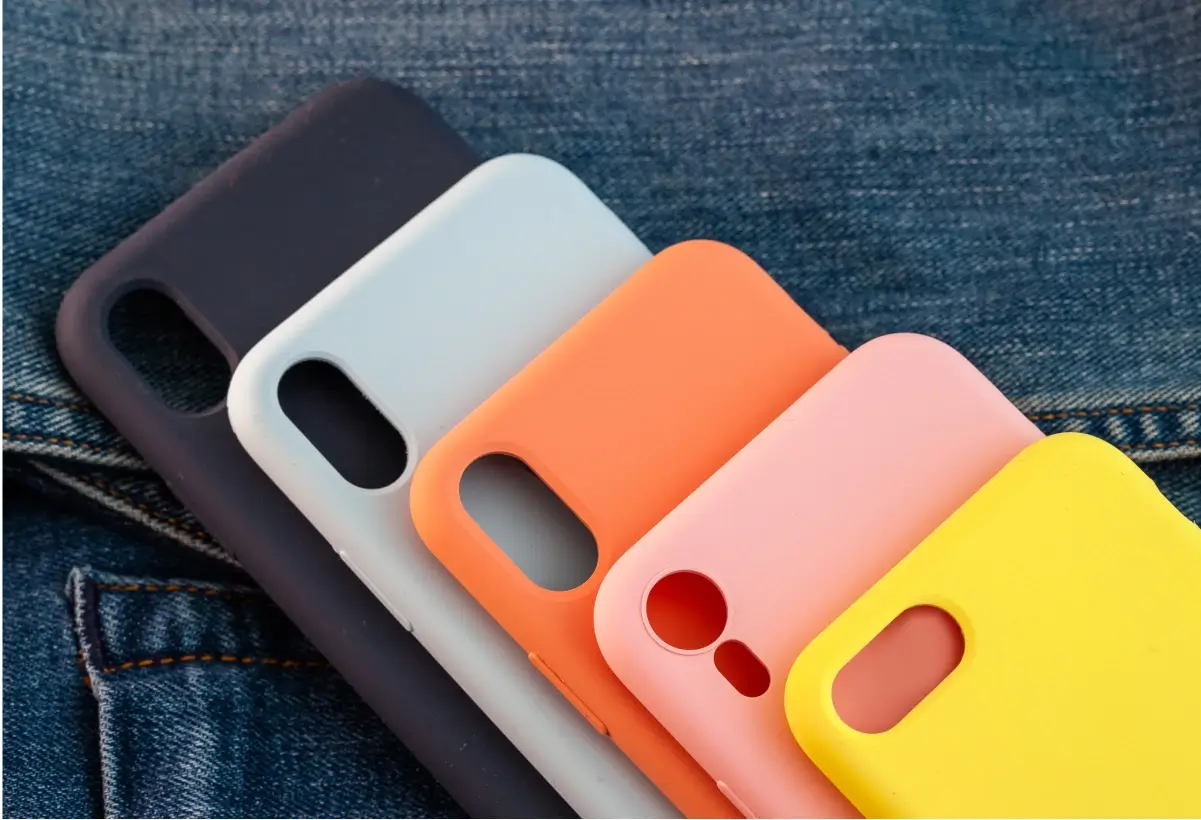
Soft silicone cases are popular for their feel and colour options. They provide moderate impact absorption and a consistently comfortable grip. However, silicone attracts dust aggressively, can tear over time, and tends to create friction in tight pockets. They are best thought of as scratch-prevention and comfort tools rather than serious drop protection.
Best for: Low-risk users who change cases frequently and prioritise texture and colour variety.
Material Reality Check: No single material is best at everything. The right choice is the one whose strengths match your most likely impact scenarios. A beautiful leather case cannot save a phone dropped onto concrete from shoulder height. A rugged dual-layer case is overkill for a desk-bound professional.
TIP 03 | Check Compatibility With How You Actually Use Your Phone
A case that compromises the way you use your phone every day is not a good case, regardless of how well it protects against drops. The third and often most overlooked tip is to verify that any case you are considering works seamlessly with your daily habits, accessories, and tech ecosystem.
Here are the compatibility factors that matter most:
If you use wireless charging, whether standard Qi or Apple MagSafe, case thickness matters. Cases thicker than roughly 3 to 4 millimetres can reduce or entirely block wireless charging efficiency. For MagSafe specifically, look for cases that explicitly state MagSafe compatibility and include the embedded magnet array that allows the magnetic connection to function correctly.
A case that forces you to remove it every time you want to charge wirelessly is a daily inconvenience that compounds into a significant frustration over months of use.
Modern iPhones and flagship Android devices have camera systems with multiple lenses, including ultra-wide and periscope telephoto lenses, that extend further from the body than previous generations. A camera cutout that is even slightly misaligned can cause vignetting, shadow artefacts, or obstruction of specific lenses.
Always verify that a case’s camera cutout is specifically designed for your exact phone model, not a generic cut that fits a range of devices approximately. Precision here is not optional.
Many protective cases are designed to be used alongside a screen protector, but not all case-and-protector combinations work smoothly together. A case with bezels that sit flush with the screen can lift the edges of some tempered glass protectors over time, creating dust pockets and reducing adhesion.
If you use a screen protector, check whether the manufacturer explicitly lists compatibility, or look for case bundles that include a matched screen protector from the same brand.
Cases that partially cover charging ports, restrict headphone jack access on devices that still have one, or create stiff button covers that require excessive force to press represent a daily usability cost. Before purchasing, check reviewer feedback specifically about port access and button feel, as these issues rarely appear in manufacturer descriptions but show up consistently in user experience reports.
Protective cases that add significant width or shift the phone’s weight distribution can make one-handed use difficult for users with smaller hands. If you regularly use your phone one-handed, prioritise cases with textured side grips and avoid those with pronounced raised edges along the lateral sides that would widen the effective grip diameter.
Phones generate meaningful heat during intensive tasks like gaming, video recording, GPS navigation, and high-speed data transfers. Cases that fully enclose the device in dense insulating materials can trap this heat and trigger thermal throttling, which reduces processor performance. Cases with slight gaps at the bottom or those made from thermally conductive materials like aramid fiber or thin polycarbonate manage heat more effectively than thick, fully sealed silicone cases.
A case that constantly catches on pocket linings, picks up lint visibly, or makes it difficult to draw the phone smoothly is one you will unconsciously begin to resent. Polycarbonate outer shells slide more cleanly than rubber or silicone exteriors. Leather develops a natural smoothness over time. If ease of pocket access matters to you, factor the outer material texture into your decision.
Compatibility Rule: Buy the case for how you use the phone today, not for how you think you might use it someday. If you have never used MagSafe, do not pay extra for it. If you charge wirelessly every night, never buy a case without confirmed Qi compatibility.
Beyond the three primary tips, here are a few additional questions that separate genuinely informed buyers from people who make the same mistake twice:
The best case manufacturers back their products with a replacement guarantee. Some even offer to replace your phone screen if it cracks while inside one of their cases. A warranty is not just peace of mind. It is evidence that the manufacturer genuinely believes in what they are selling.
Generic cases designed to fit a range of similar models always involve compromises. Cutouts are slightly too large, buttons feel imprecise, and bezels do not align perfectly with screen protectors. Always choose a case manufactured explicitly for your exact device model.
Short-term reviews reflect first impressions. Reviews written after three to six months of daily use reveal whether the case yellows, whether the button covers stiffen, whether the material degrades, and whether the protection actually performs when tested by a real drop. Filter specifically for reviews mentioning extended use before making a final decision.
A well-fitting, high-quality case that genuinely protects your phone maintains the device in better condition, which directly improves its resale or trade-in value. The math on a quality protective case is often straightforward: a 40-dollar case that keeps a 1,000-dollar phone in pristine condition is a better investment than saving 30 dollars on something that lets scratches accumulate.
Light daily use, mostly desk and bag use: Slim polycarbonate or frosted TPU, minimal bezels, clean aesthetic.
Active commuter or frequent traveller: Dual-layer TPU and polycarbonate, 6-foot drop certified, textured grip.
Parent with young children at home: Dual-layer with reinforced corners, raised screen lip, easy to wipe clean.
Outdoor worker or construction professional: MIL-STD-810H certified, 8-foot drop rating, port covers, dust resistance.
Style-first user, careful phone handler: Full-grain leather over polycarbonate inner, minimal branding, quality patina.
Ultra-slim preference with some protection: Aramid fiber or precision-fit polycarbonate, slim profile, no added bulk.
The right protective phone case is not about finding the most expensive option or the one with the most impressive-sounding specifications. It is about answering three honest questions: What level of risk does your daily life actually present? What material properties match that risk most effectively? And does this case work with the specific way you use your phone every day?
Answer those three questions clearly, and the choice becomes significantly simpler. You stop browsing aimlessly through hundreds of listings and start evaluating cases against criteria that actually matter for your life.
The best phone case is one you never have to think about. It protects quietly, fits seamlessly into your daily habits, and allows you to use your phone exactly as you normally would, without friction or compromise. That case exists. Now you know how to find it.
Summary: Match protection level to real-world risk. Choose materials based on their actual properties. Verify compatibility with your charging, camera, and daily habits. Buy once. Buy right.
Tags: Protective Phone Case | Best Phone Case 2026 | How to Choose a Phone Case | MIL-STD-810 | iPhone Case Guide | Android Case Buying Guide
Published March 2026 | Original content, written exclusively for this publication.